Before the Deposit: Reading Allocation Signals at London’s 2026 Luxury Show
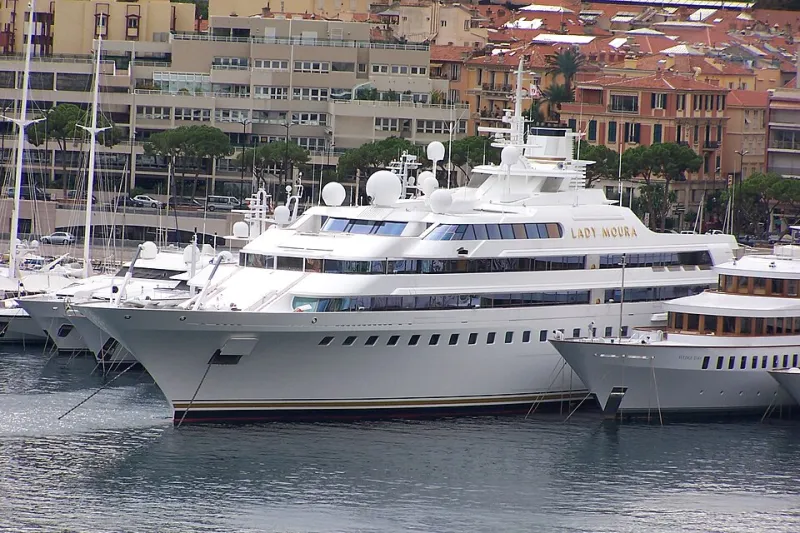
Photo: Berthold Werner, Public domain, via Wikimedia Commons
At the 2026 London Yacht, Jet & Prestige Car Show, the most valuable object in the room may not be on a stand at all. It may be a place in a queue. For UK buyers considering a limited-run prestige car, a superyacht build slot or a private jet delivery position, allocation has become a central part of the purchase conversation. The list is no longer an administrative afterthought. It is a sales instrument, a signal of intent and, in some cases, a product in its own right.
That shift deserves careful reading. Scarcity is genuine in parts of the market: factory capacity is finite, yacht yards plan years ahead and aircraft delivery positions are shaped by completion schedules and regulatory requirements. But scarcity is also staged, communicated and commercialised. Exhibitors at a London show have every reason to make allocation feel consequential, because a buyer who commits to a list is a buyer who has begun to commit to the brand.
Why the queue has moved to the foreground
In a mature luxury market, the object itself is rarely the only scarcity. The buyer is often purchasing timing, specification control and certainty of delivery. A limited-run car may be sold out before it is publicly unveiled. A yacht yard may have one suitable slot in a preferred size bracket before the next planning cycle. A private jet delivery position may depend on completion capacity as much as on the airframe order book.
Exhibitors use these constraints to qualify interest. A waiting list allows a dealer, broker or manufacturer to gauge seriousness without forcing an immediate contract. It also creates a useful database of buyers, specifications and timing preferences. None of that is inherently improper. The difficulty arises when buyers treat a place on a list as a promise, or when the language of allocation blurs the line between expressed interest and enforceable priority.
Three lists, three different meanings
A prestige car allocation is usually the most structured. It may refer to a factory build slot, a dealer's internal priority order or a regional quota. The buyer should establish which of these is being discussed. A dealer may be able to influence priority, but it does not always control the factory's final build schedule. Specification freezes, price adjustments and resale restrictions can all attach to limited-run models.
A superyacht build slot is different again. The allocation may sit with the yard, with a broker or with a central agency. It can involve stage payments, a slot agreement, a build contract and a separate supervision arrangement. The buyer should know whether the slot is transferable, what design work is included and what happens if the yard's schedule moves. A berth on the Thames may be the visible end of the purchase, but the allocation begins much earlier in the contractual chain.
Private jet delivery positions have their own logic. The airframe order, the completion and interior schedule, the registration process and the management arrangement can each affect timing. A delivery position is not simply a date. It is a bundle of dependencies, and the buyer should ask which party controls each one.
The questions to ask before joining
The first question is simple: what exactly is being allocated? A place in a queue, a contractual right to a build slot and a provisional delivery window are not the same thing. Buyers should ask for the answer in writing, even at the show. A verbal assurance that a place is being held is rarely sufficient when significant sums are later committed.
The second question concerns money. Is a deposit required to join the list? If so, who holds it, on what terms and against what obligation? Is it refundable, and if not, what triggers its retention? For yachts and jets, the buyer should also understand the payment schedule that follows. A small list fee can obscure a much larger stage-payment commitment.
The third question is ranking. How is priority determined? Is it date of registration, existing customer relationship, trade-in value, financing arrangement or specification? If the ranking can change, the buyer should know why. A list that is regularly reordered by the seller is not a queue in any meaningful sense.
The fourth question is timing. Is the delivery window firm, target or indicative? What happens if it slips? Are there remedies, or is the buyer simply expected to wait? In a market where allocation is marketed as a privilege, the consequences of delay deserve as much attention as the benefits of priority.
The fifth question is price. Is the price fixed at the point of allocation, indexed later or subject to specification changes? Limited-run cars often carry options that are difficult to price early. Yacht builds can move with yard capacity and material costs. Jet completions can vary with interior specification and regulatory requirements. A buyer should not confuse allocation with price certainty.
Finally, the buyer should ask about transferability and exit. Can the position be transferred, assigned or sold? Are there restrictions on resale, particularly for limited-run cars? What happens if the buyer's circumstances change? These questions are easier to ask before joining than after.
Scarcity as part of the experience
The London show format amplifies allocation culture. Private lounges, invitation-only presentations and discreet discussions away from the public floor all lend the queue an aura of access. That atmosphere is part of the luxury experience, and it is not without value. It gives buyers a chance to meet the people who control supply and to test whether the relationship is substantive.
But UK buyers are generally well served by a sceptical posture. Scarcity should be evidenced, not merely performed. A credible exhibitor can explain capacity constraints, show a build schedule and identify the contractual point at which a place becomes a commitment. A less credible one may rely on atmosphere alone.
The most useful approach is to treat allocation as a contract rather than a courtesy. Compare lists across brands and brokers. Ask what happens if the schedule moves. Keep the show conversation preliminary and insist on written terms before any significant payment. At the 2026 London Yacht, Jet & Prestige Car Show, the queue may be the product on offer, but certainty is what the buyer is actually purchasing.