Buying on the Curve: Resale Timing for Yachts, Jets and Cars in 2026

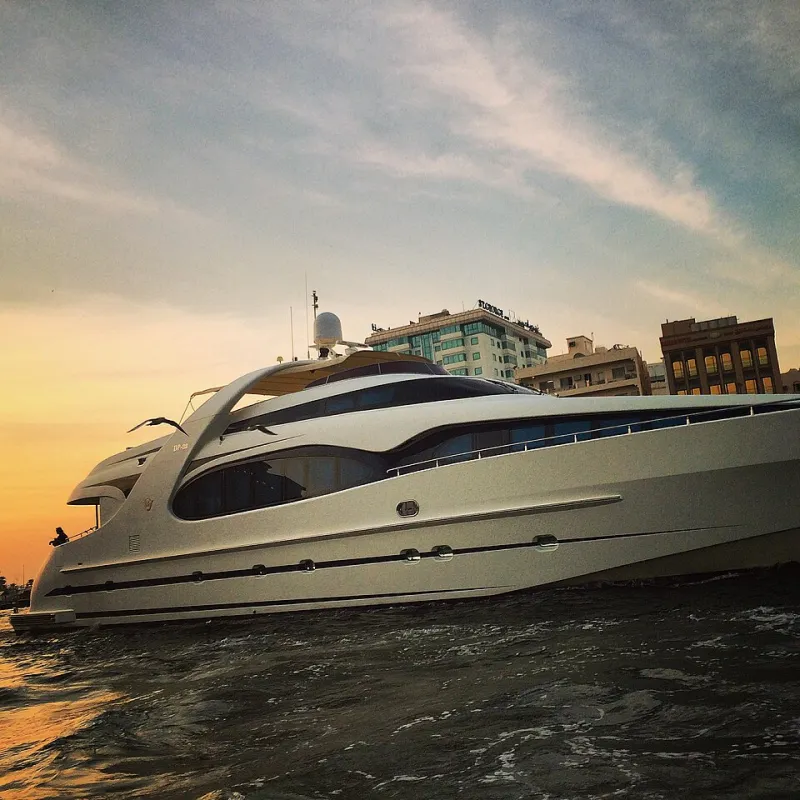
Photo: Mygeorgianguide, CC BY-SA 4.0, via Wikimedia Commons
Depreciation is rarely a straight line. In luxury mobility it is a set of curves, each with its own rhythm. A yacht responds to seasons and condition, a private jet to hours and maintenance status, and a prestige car to marque, mileage and fashion. For UK buyers deciding between new, nearly new and classic, the useful discipline is to match the holding period to the asset's clock.
Three Assets, Three Clocks
A yacht is often judged by age, but its value is shaped more by use, condition and specification. A jet is judged by airframe hours, cycles and the timing of major maintenance events. A car is judged by mileage, history, originality and demand for the model. The buyer who applies a single rule to all three usually pays for the simplification.
The Yacht Curve: Seasons, Not Years
New yachts absorb a significant early adjustment. The first owner pays for commissioning, delivery, specification choices and the simple fact that the boat is no longer new. After the first few seasons, the curve often flattens, provided the yacht has been maintained and used sensibly.
That pattern creates a clear choice. A buyer who intends to keep a yacht for many years may justify a new build because the specification can be tailored and the warranty period is valuable. A buyer who expects to sell within two or three seasons is often better served by a nearly new yacht whose initial adjustment has already been taken by someone else.
Specification matters on the exit. Proven layouts, reputable engines, sensible power and easy crew requirements tend to travel well. Highly personal interiors and unusual configurations can be delightful to the first owner and expensive to the second. Seasonality also plays a part: selling before the season can be better than selling at the end of it, when buyers are thinking about winter costs rather than summer plans.
The Jet Curve: Hours and Mandates
Private jets depreciate on a different rhythm. Airframe hours and cycles matter, but so do engine programmes, maintenance status and compliance with current mandates. A low-hours aircraft can still be expensive if a major inspection is close. A higher-hours aircraft can represent value if the maintenance forecast is clear and the price reflects the next event.
New aircraft offer warranty and specification, but they also carry the steepest early adjustment. Mid-life aircraft can be the value play for buyers who understand the maintenance calendar. The risk is holding through a heavy check or engine overhaul without pricing it into the purchase. For UK buyers, the exit is often strongest before a known maintenance event, not after it.
The Car Curve: Marque, Mileage and Moment
Prestige cars are the most familiar curve, but they are not uniform. Mainstream luxury models often take their largest hit in the first year or two. Limited editions, rare specifications and genuine classics can behave differently, sometimes holding value or appreciating when demand outstrips supply.
Mileage and history remain decisive. A low-mileage car with full service records will usually find a buyer more easily than a higher-mileage example with gaps in its history. Colour, transmission and options can be surprisingly powerful in the used market. Originality matters, especially for older cars, where over-restoration can be as damaging to value as neglect.
New, Nearly New or Classic
The practical framework is straightforward. If the intended hold is short, the case for nearly new is usually strong because the first owner has absorbed the sharpest part of the curve. If the hold is long and the specification is important, new may make sense. If the buyer is an enthusiast with patience and knowledge, a classic can offer pleasure and potentially more stable value, but it should not be bought as a short-term financial trade.
Specification Choices That Protect Residuals
Across all three assets, the same principle applies: buy for the second owner as well as the first. On a yacht, that means a layout and power package that a broad group of buyers will understand. On a jet, it means a clear maintenance status and avionics that meet likely requirements. On a car, it means desirable colours, sensible options and a documented history.
The Cost of Holding Too Long
The hidden cost is not only depreciation. It is the maintenance event, the refit, the major service or the engine overhaul that arrives while the asset is still in the portfolio. A yacht held through several seasons may need paint, upholstery or systems work. A jet held through a heavy check may see its value adjust sharply. A car held past a significant mileage threshold may face a different market entirely.
This is why resale timing deserves the same attention as purchase price. The buyer who plans the exit at the point of entry usually makes better specification decisions and avoids holding an asset through a predictable cost event.
A UK Buyer's Timing Framework
In 2026, UK buyers should write down the intended holding period, the realistic annual usage, the likely exit route and the maintenance calendar before committing. Compare total cost per season or per year, not just the headline price. Use advisers who understand the specific asset, and treat the exit as part of the purchase.
The market rewards planning. A yacht, a jet and a car may all be luxury purchases, but they are not the same financial instrument. The buyer who respects their different curves is better placed to enjoy the asset and sell it well.