The Capital’s Capacity: Auditing London Aftercare Before a 2026 Show Commitment
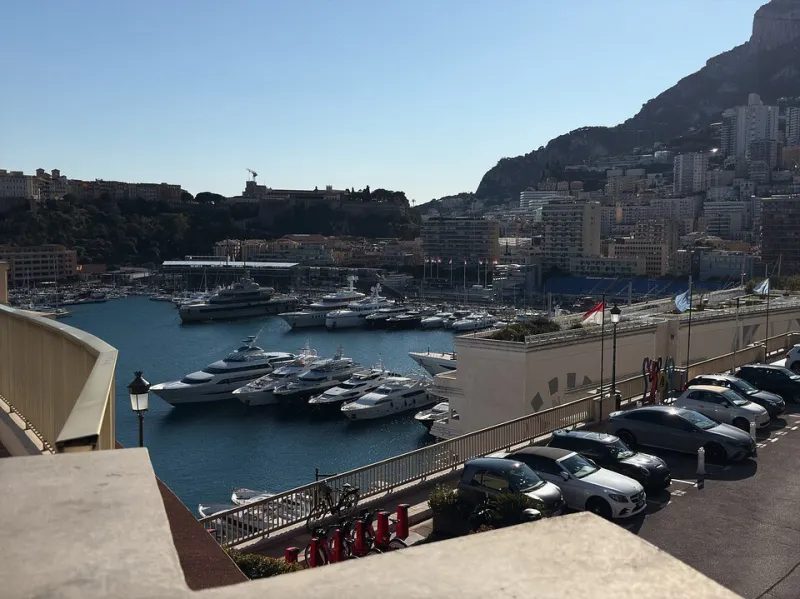
Photo: Mike is Michi, CC BY-SA 4.0, via Wikimedia Commons
A show stand is designed to answer the question every buyer arrives with: what does this asset do? The more useful question for a London owner is quieter and less photogenic: who looks after it once the handover ribbon has been cut? For buyers balancing a yacht, a private jet and a prestige car, aftercare is not a footnote to the purchase. It is the operating system beneath it. The strongest London acquisition is not necessarily the one with the longest specification sheet; it is the one the capital can actually maintain.
Read the Service Map, Not the Sales Map
Sales infrastructure and service infrastructure are rarely the same thing. A marque may have a handsome Mayfair showroom, a yacht brand may be represented at a prominent Thames berth, and an aircraft may be marketed through a London office, yet the practical service chain can sit elsewhere. Before a deposit is discussed, ask for the service map in plain terms: where the asset is maintained, who is authorised to work on it, how far a technician must travel, and which parts are held in the UK rather than ordered from continental Europe.
For a yacht, the relevant map includes the berth, the marina’s contractor rules, the nearest approved engineers and the availability of a suitable tender or workboat. For a jet, it includes the London gateway, the maintenance organisation, hangar capacity and the arrangements for aircraft on ground. For a car, it includes the dealer or independent specialist, the covered-transport provider and the practical route between storage, service and use. A single London address on a brochure is not a service network.
Response Times Need Evidence, Not Adjectives
Every provider will describe its response as prompt. The buyer’s task is to replace the adjective with a number and, where possible, a recent example. Ask what the contractual response time is, what the actual median has been, and whether response means a telephone call or an engineer on site. Those are different promises. Ask also about the escalation path when the first contact is unavailable, and request a named individual rather than a general office number.
Parts availability deserves the same scrutiny. A part held in the UK can transform a repair; a part held in Germany or Italy introduces customs friction and scheduling risk. For yachts, the question extends to whether common consumables and warranty items are stocked locally, and whether the marina permits parts to be delivered directly to the berth. For aircraft, parts logistics are a specialist discipline, but the buyer should still understand who controls the process and how the operator communicates during an aircraft-on-ground event. For cars, ask which components are stocked in London and which are ordered per job.
Berth-Side Is a Different Discipline
A yacht’s aftercare is shaped by the berth as much as by the brand. Thames moorings vary in power, water, waste disposal, security and contractor access. Some marinas impose restrictions on working hours or on the type of equipment that can be brought alongside. A service provider that is excellent in a shipyard may be constrained at a central London berth. Before committing, confirm who can attend on the water, what permissions are required, and how warranty work is approved when the vessel is not in a yard.
Bridge lifts and tide windows add another layer. A repair that requires a movement upriver is not a simple diary entry; it is a logistical sequence. Buyers should ask how the provider plans around those constraints and whether the berth itself has a contingency for power loss, water ingress or security incidents. The answers reveal whether the aftercare proposition has been designed for London or merely imported to it.
The Aircraft on the Ground
Private aviation aftercare is often discussed in terms of operators and charter availability, but an owner’s relationship is with maintenance and dispatch. Ask how an aircraft-on-ground situation is handled at the relevant London gateway, who coordinates the mobile repair team, and how quickly a hangar slot can be secured. The quality of the answer depends on relationships as much as facilities. A provider with strong local ties may resolve a problem faster than a larger organisation waiting for a remote instruction.
Slot coordination matters too. A maintenance event that overruns can collide with airport slot constraints, crew duty limits and passenger commitments. The buyer should understand who owns the coordination and how the owner is kept informed. The same discipline applies to parts: an aircraft may be technically repairable, but commercially grounded until a component clears customs. Ask who manages that process.
Covered Transport and the Last Mile
The prestige car is where aftercare becomes most visible, because the last mile is literal. Enclosed transport, covered storage and careful loading are not valet conveniences; they are part of the asset’s condition record. Ask whether the transport provider is approved by the marque, what insurance covers the movement, and how the car is secured during loading. For a mixed collection, the same question applies across assets: who moves the tender, who receives the car at the berth, and who signs for the aircraft catering uplift?
Fragmented responsibility is the quiet risk. A yacht manager, a car storage operator and an aviation handler may each perform well, yet no single party owns the handover between them. The buyer should identify the coordinating point and test it with a scenario: a car arriving at a Thames berth on the same afternoon as a yacht inspection and a jet departure. If the answer requires three separate conversations and no shared timetable, the aftercare model is not yet joined up.
One Diary, Three Assets
Cross-asset coordination is the advantage London buyers should demand. Seasonal servicing, MOT and inspection dates, crew changes, hangar checks and berth maintenance all compete for the same diary. A service book that records only the car’s annual visit is incomplete. The modern equivalent is a shared schedule that shows when each asset is available, when it is committed to maintenance, and who is responsible for the movement between those states.
This is not a request for unnecessary technology. A simple, maintained calendar with named contacts and escalation routes is enough. The test is whether the provider can produce it before the sale, not whether they promise it afterwards. Ask for the aftercare schedule to be annexed to the purchase agreement, with response times, parts arrangements and transport responsibilities stated in the same document as the specification.
The Audit Before the Deposit
A practical London audit can be completed in a short series of questions. Where is the asset serviced? Who is authorised? What is the evidenced response time? Which parts are held locally? What berth, hangar or storage constraints apply? Who coordinates transport? What happens at two in the morning? The answers need not be perfect, but they must be specific. Vagueness at this stage is not a negotiating position; it is a warning.
The 2026 show will present many compelling specifications. The buyer who leaves with a deposit agreement should also leave with a credible aftercare plan. In London, the capital’s capacity is part of the product. A yacht, jet or car that cannot be maintained conveniently, promptly and coherently is a specification without a future.