Static, Not Idle: Reading Exhibition Duty on a London Show Yacht, Jet or Car
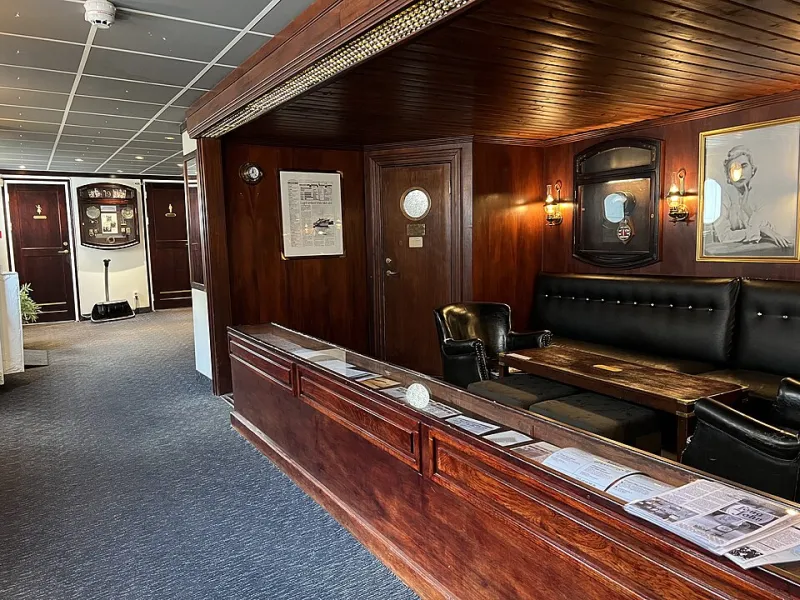
Photo: Sinikka Halme, CC BY-SA 4.0, via Wikimedia Commons
London’s luxury shows perform a peculiar kind of alchemy. A yacht that has spent seven days alongside a Thames-side berth, a jet whose cabin has been inspected by several hundred visitors, and a car that has been polished between every opening can leave the hall looking better than it did on arrival. For the UK buyer, the difficulty lies not in spotting obvious damage but in understanding what a week of display duty has actually done to the asset — and what it has not.
Display Is a Form of Use
The instinct to treat a show exhibit as “new” is understandable, particularly where the odometer or hour meter reads exceptionally low. But exhibition duty is not inactivity. It is a controlled, repetitive programme of access, cleaning, power supply, starting, moving and presentation. Static load cycles accumulate in ways that a delivery-mileage figure does not capture: doors opened and closed, seats sat in, cabinetry handled, shore leads connected and disconnected, batteries cycled, paint wiped and corrected.
The correct question is not whether an exhibit has been used. It is whether the use has been recorded, bounded and disclosed. A seller who can produce a pre-show and post-show condition report, a log of demonstration activity and a clear statement of what was and was not operated is offering something more valuable than a pristine surface.
Yachts: Generators, Shore Power and the Wear You Cannot See
A yacht on a London stand may never leave its berth, yet its systems can run continuously. Air conditioning, lighting, refrigeration, audio-visual displays and battery charging all draw power. Some exhibits rely on shore power; others run generators for part of the day. Ask for generator hours at arrival and departure, shore connection logs, and the schedule for engine starts. A low engine-hour figure is reassuring only if the auxiliary systems have not been carrying the load.
Interior wear deserves close attention. Carpets in the saloon, treads on stairways and the condition of handrails record foot traffic more honestly than a glossy brochure. Teak decks may have been cleaned repeatedly; upholstery may have been brushed and dressed. None of this is fatal, but it should be priced. Ask whether visitors were asked to remove shoes, whether access was restricted to certain areas, and who carried out daily cleaning. Cleaning itself can introduce wear if it has been aggressive or frequent.
On the engineering side, request the battery state of health, not merely the voltage reading on the day. A yacht that has spent a week on display may have deeply cycled domestic batteries, particularly if shore power was interrupted or the display load was heavy. Check bilge areas for signs of repeated access, and ask for the pre-show survey alongside any post-show inspection.
Aircraft: Cabin Dress and the Flight-Hour Question
A business jet displayed in London may be a static exhibit only, or it may have flown demonstration sectors and repositioning legs around the show. The distinction matters. Demonstration flights add cycles, pressurisation events and cabin wear that a static display does not. Ask directly whether the aircraft flew during the show period, who piloted it, and whether those hours appear in the logbooks.
The cabin is the most visible theatre and the least reliable indicator of condition. Seats, carpets, tables and galley surfaces can be dressed to a high standard while showing the effects of repeated inspection. Look for compression in seat cushions, scuffing at door surrounds and wear on moving parts. Ask for the cabin maintenance report and whether any touch-up or replacement was carried out for the show.
Paperwork is where the aircraft separates itself from the car and the yacht. Confirm the current registration, maintenance release, airworthiness status and any outstanding service bulletins or airworthiness directives. A show exhibit may have been maintained to a display standard rather than a delivery standard; the buyer should know which. If demonstration flights took place, request the flight log, crew details and insurance confirmation.
Cars: Paint Under Lights, Batteries Under Load
Prestige cars on a stand are often treated to repeated detailing. That can produce a finish that looks better than factory delivery, but it can also mask light swirling or, in less careful hands, introduce it. Ask whether paint protection film was applied for the show and whether any machine polishing took place. A paint depth reading is a reasonable request on a high-value car.
Mileage is a poor proxy for display duty in cars. A vehicle may have covered only delivery miles while being started repeatedly, moved between stand positions and left with doors and boots open for hours. For electric and hybrid models, request the battery state of health report and confirm whether the high-voltage battery was kept at an appropriate charge. Twelve-volt batteries are particularly vulnerable to repeated short moves and long periods of accessory load.
Check tyres for flat-spotting if the car has stood in one position under display lighting, and inspect brake discs for surface corrosion where the car has been washed frequently and moved little. Confirm the warranty start date, the V5C details and whether the car has been registered to the dealer or remains unregistered. A show car that has never been taxed or registered is not automatically “new” in the paperwork sense; the buyer should establish the exact status before completion.
The Negotiation After the Carpet Is Rolled Away
Exhibition duty is not damage, and it should not be treated as a bargaining weapon without evidence. It is a disclosure item. The fair approach is to establish what happened, what it cost in wear, and what remedy is proportionate. That may be a service, a battery replacement, a paint correction, an extended warranty or a credit against berth or storage costs. On a yacht, crew training or a berth credit can be more useful than a modest cash reduction. On an aircraft, a fresh maintenance inspection carries more weight than a cosmetic concession.
The strongest position belongs to the buyer who asks early, records the answers and commissions an independent inspection before the exhibit is moved. Once the stand is struck and the asset is back in storage or transit, the evidential trail becomes harder to assemble.
A Short Buyer’s Checklist
- Request pre-show and post-show condition reports, not a single undated survey.
- Ask for hour-meter, odometer and battery logs at arrival and departure.
- Confirm whether demonstration flights, sea trials or road tests took place.
- Establish who cleaned, detailed and moved the asset during the show.
- Verify registration, VAT status and warranty start date against the paperwork.
- Commission an independent inspection while the exhibit is still in London.
- Price the wear you can prove, and negotiate remedies that preserve the asset rather than merely discount it.
A London show can be an excellent place to buy, precisely because the asset is available for close inspection and the seller is motivated to conclude. The buyer’s task is to look past the lighting. What matters is not how the exhibit looked under the lights, but how it has been treated between them.