Flying Rooms: Five Cabin Choices London Private Jet Buyers Are Weighing in 2026
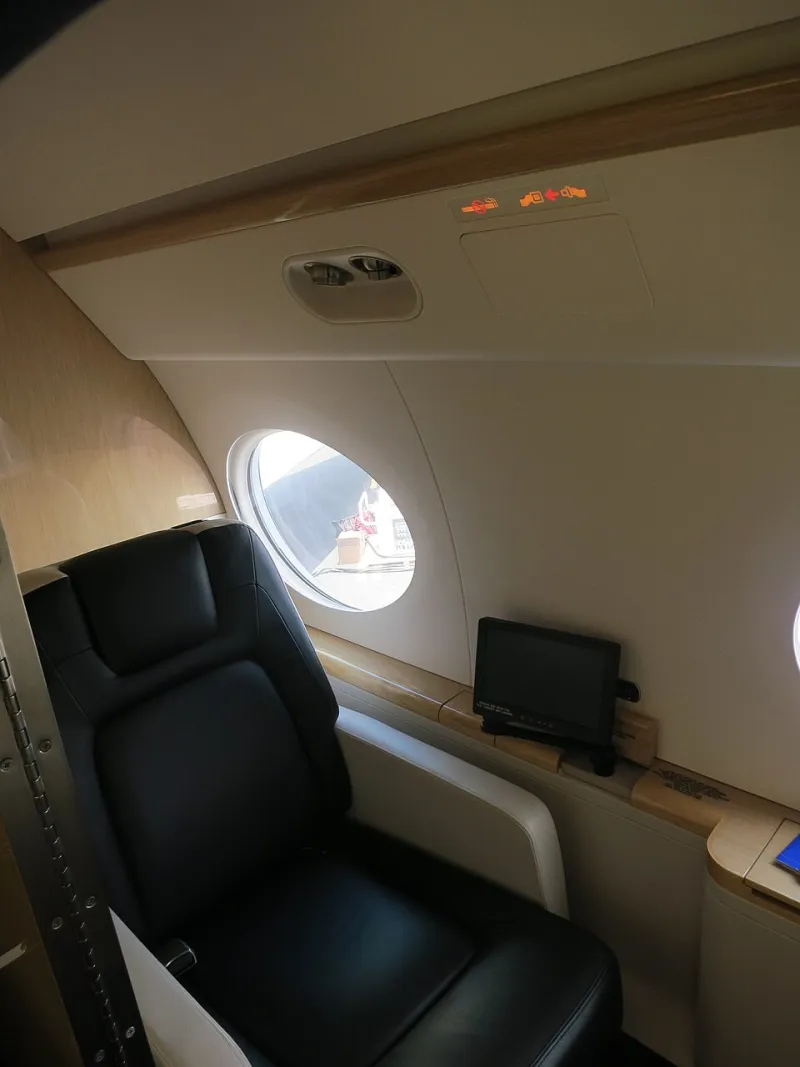
Photo: JetRequest.com, CC BY-SA 3.0, via Wikimedia Commons
The private jet cabin is often described as a blank canvas. It is not. It is a series of trade-offs between comfort, utility, weight, maintenance and the resale market. For UK buyers using London City, Farnborough, Luton and Biggin Hill as regular gateways, the cabin decisions made in 2026 will outlast the first owner and will be read by the second. The sensible approach is to specify for the route pattern, the luggage load and the exit, not for the brochure.
1. Pet-friendly, not pet-proof
A growing number of UK owners want the cabin to work for dogs, but pet-friendly should not mean shag pile and soft leather. The practical specification is hard-wearing flooring, washable or removable covers, a defined pet zone and restraints that satisfy the operator. Climate control matters, as does the ability to clean the cabin quickly between sectors. The trade-off is weight and appearance: durable materials can look less luxurious, and a dedicated pet area removes seats that might otherwise be sold at resale. Buyers should ask whether the layout can be returned to a standard configuration without a major interior refit.
2. A safe that is more than a lockbox
Secure valuables storage is a common request, particularly for owners carrying watches, jewellery or documents between London and Geneva, Nice or the Gulf. The useful questions are where the safe is mounted, whether it is certified, how it is accessed in flight and whether it interferes with maintenance access. A heavy safe in the wrong place is a weight and balance problem; a light safe in the wrong place is a false comfort. The trade-off is between security and cabin flexibility. A fixed safe may reduce storage or seating options, and it may not add value at resale unless the next buyer has the same requirement.
3. Connectivity treated as a utility
Connectivity is no longer a luxury line item. For London buyers, the cabin needs to support voice and data on short European sectors and longer transatlantic or Middle East flights. That means asking about antenna configuration, satellite coverage, bandwidth, cyber security and the cost of data. The cabin management system should be intuitive enough for guests and robust enough for business use. The trade-off is between capability and complexity: more connectivity means more equipment, more certification work and more maintenance. A system that is over-specified for the route pattern can become a costly passenger.
4. Resale-neutral finishes
Bespoke interiors are personal, and that is the point. But the UK market has a long memory for monograms, dark veneers and highly individual colour schemes that narrow the buyer pool at resale. The safer specification is a light, neutral palette, durable leather, practical veneers and finishes that photograph well without looking anonymous. Buyers should distinguish between personalisation that can be reversed and structural choices that cannot. Embroidered headrests are easy; a bespoke divan layout is not. The trade-off is between immediate delight and long-term liquidity.
5. Luggage-first layouts
London routes often involve short sectors with heavy luggage: ski trips to the Alps, summer transfers to the Mediterranean, or business trips with samples and equipment. A luggage-first layout may mean fewer seats, a larger aft baggage area or convertible divans that can be reconfigured between passengers and cases. The trade-off is obvious: more luggage capacity can mean less cabin comfort, and a layout optimised for cases may be less attractive to a buyer who prioritises seating. The answer is to model the real load, not the average load, and to check the aircraft's zero-fuel weight and centre-of-gravity limits with the proposed interior.
The cabin is the product because it is the part of the aircraft the owner experiences most directly. But it is also the part that is hardest to change and easiest to misjudge. In 2026, the strongest specifications for London buyers will be those that are honest about the route, the luggage and the exit. Bespoke luxury has its place; resale discipline pays for it.