Four Ways to Fly Private Without Buying the Aircraft: A 2026 Guide for UK Buyers
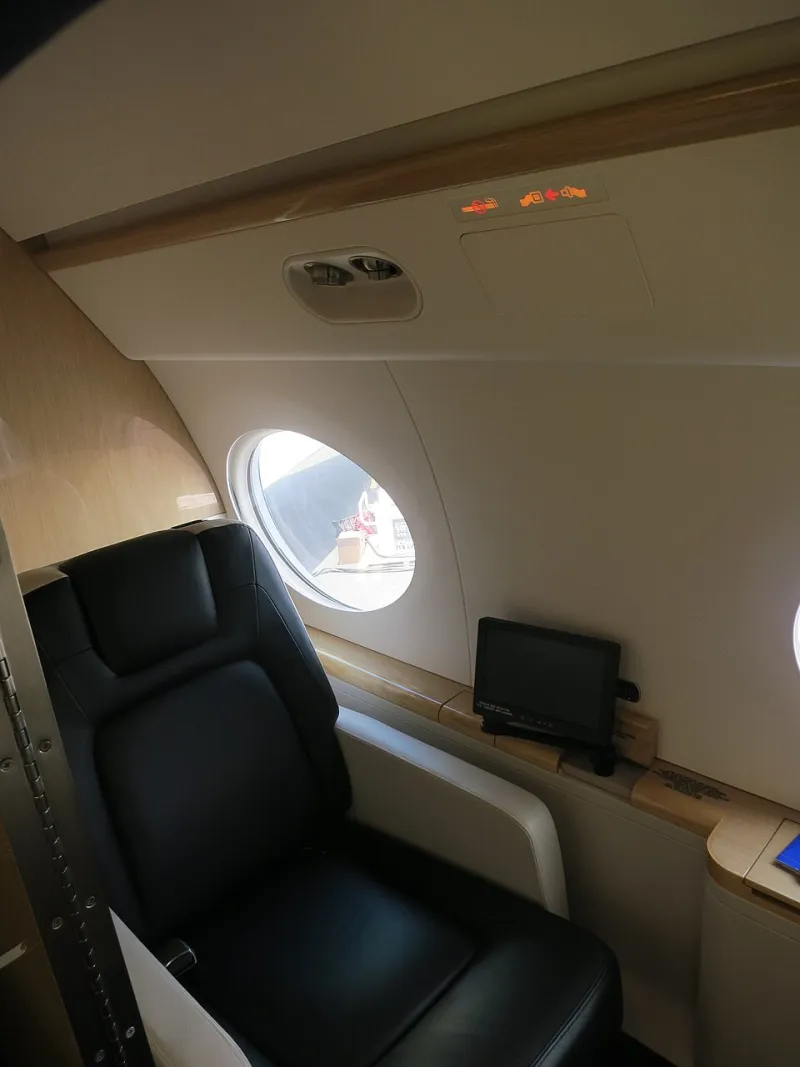
Photo: JetRequest.com, CC BY-SA 3.0, via Wikimedia Commons
A London buyer who wants to be in Geneva by lunchtime has never had more routes to the aircraft, and never more ways to pay over the odds for one. The UK market has settled into four distinct models, each with its own arithmetic, its own contract terms and its own particular traps. What follows is a practical comparison rather than a sales tour.
The routes that set the benchmark
British private aviation is a short-haul business. The journeys that define the market are London to Geneva in winter, London to Nice and Ibiza in summer, London to Milan and Paris for business, and the domestic run to Edinburgh or Aberdeen. Departure points are familiar: Farnborough, Luton, Biggin Hill, London City, Oxford, Southend and Stansted.
Almost every quote a UK buyer receives will be built on one of those pairings, so they make a useful yardstick. Treat the figures below as 2026 market ranges rather than fixed prices; they move with fuel, demand and, above all, notice period.
On-demand charter: the default and the benchmark
Charter is the model against which every other option should be measured. You buy a whole aircraft for a specific journey, and you pay for the flying time plus positioning, landing and handling.
A typical one-way London to Geneva on a light jet — a Phenom 300 or Citation CJ3+ class aircraft — sits somewhere between £9,500 and £13,000. A midsize aircraft such as a Citation XLS+ or Learjet 75 will land between £14,000 and £18,500. A super-midsize cabin, the Challenger 350 or Citation Longitude bracket, runs £22,000 to £28,000.
A return trip is not usually priced as a return. If the aircraft does not stay with you, you are effectively buying two one-way legs plus the cost of getting the aircraft home. A weekend in Nice can therefore cost materially more than a day trip to Zurich.
Jet cards: prepaid hours and conditional loyalty
The jet card is a deposit scheme dressed as a membership. You place a sum — commonly £100,000 to £250,000 — with a provider and draw down flying hours at a fixed hourly rate.
For 2026, expect light jet hours at £5,200 to £6,800, midsize at £7,500 to £9,500 and super-midsize at £11,000 to £14,000, subject to the programme. In exchange you get a quoted rate that does not move with spot demand, guaranteed availability with 24 to 72 hours' notice, and a single point of contact for ground arrangements.
The conditions are where the value is won or lost. Ask specifically about peak-day surcharges, which can add 15 to 30 per cent on the days you most want to travel; about blackout dates around Christmas, half-term and the Monaco season; about how much repositioning is included and how much is capped; about the expiry period; and about whether the deposit is held in escrow. A card is only as reliable as the fleet behind it, so establish whether the provider operates its own aircraft or brokers to third parties.
Fractional ownership: a deed with an operating agreement attached
A fraction buys you a share of a specific airframe, plus the right to use it for a set number of hours a year. A one-sixteenth share in a light jet might cost around £500,000, with monthly management of £14,000 to £20,000 and an occupied hourly charge of £2,400 to £3,200. That typically delivers roughly 50 hours of flying a year.
It works when the hours are predictable and the routes repeat. It works less well when the term is five years, the exit value is uncertain and the fleet you bought into can be substituted by the operator. Read the substitution clause before the brochure.
Empty legs: the standby bargain
Empty-leg pricing exists because aircraft have to reposition. A leg that would cost £10,000 can be sold for £3,500 to £6,000 when an operator needs to move an aircraft anyway, which is a 40 to 75 per cent discount.
The catch is the entire product. Timing is fixed and often released only a day or two ahead. The route can shift or vanish. Payment is non-refundable. It suits a flexible leisure trip and almost never suits a meeting you cannot move.
The charges that never make the headline rate
Every model above is priced on a base rate, and every base rate excludes several familiar extras. De-icing can add £1,500 to £4,000 on a bad January morning at a northern European airport. Crew night stops, out-of-hours movements, and landing and handling at capacity-constrained airports such as London City all appear separately. Catering is rarely included. Fuel surcharges and, increasingly, sustainable aviation fuel contributions are passed through.
Air Passenger Duty is levied at the higher rate on private aircraft and is collected by the operator, so confirm whether quotes are duty-inclusive. Ground transport, hangarage at the far end and short-notice aircraft changes complete the list.
The practical discipline is to request an all-in quote for a named route, a named date and a named aircraft type, then compare that figure with every alternative rather than comparing headline rates.
Which model suits which buyer
Under about 25 flying hours a year, charter — with a watching brief on empty legs — is almost always the rational choice, because you carry no fixed cost. Between 25 and 60 hours, a jet card becomes attractive if the peak-day terms are reasonable. Above 60 hours on repeat routes, the fixed costs of a fraction start to wash their face, and above roughly 200 hours the case for outright ownership, or a shared ownership arrangement with a management company, is worth modelling properly.
A final point for London buyers: the choice is not a loyalty decision. It can be revisited annually, and should be. The market is competitive, capacity is returning, and a programme that suited a buyer flying twice a quarter to Geneva may not suit one now flying monthly to Milan.